Are NFTs for Rich People Club or for Everyone Participating in Art?
- YangQing

- 2022年10月8日
- 讀畢需時 2 分鐘
已更新:2022年10月9日
Weekly thoughts on SO-CALLED ART-TECH
The news about NFTS always sounds ridiculous, like Beeple’s Everydays: The First 5000 Days sold for $69.3 million, or celebrities like Justin Bieber, Jimmy Fallon bought the Bored Ape Yacht Club NFTs, the cartoon apes collection totaled over $1billion.
It really looks like a new form of collection among the rich, buying a popular and high-price NFT as a symbol of wealth, gaining a ticket to meet the people having similar social status, and aiming to make more money as an investment. The celebrities use their influence to show off their NFTs on social media, the more people know about NFTs, the more values their NFTs would increase.
A typical example can be Ghozali Everyday, an NFT collection by an Indonesia 22-year-old college student Ghozali Ghozalu, he sold his everyday selfies in front of the computer, now his works is worth millions in ETH.I t is the proof of authenticity and ownership behind the digital artworks makes people buy it at a high price, rather than the true value of the artworks, a totally buyer-oriented deal.

But on the other hand, Ghozali Everyday offers a new thought, NFTs may give opportunities for everyone to participate in art creation, artists have new chances to earn money from their digital art works. Self creative signatures are so important in the NFT world, we could sell our uniqueness for money.
I also see some artists’ wonderful transfer from real works to NFTs. Cai guoqiang’s Your Daytime Fireworks allows audience who are familiar with his work getting entrance tickets, minting their own firework according to the weather and the festival in Cai’s calendar. This is a great NFT example to engage the audience with the artwork, also giving the fleeting fireworks the enduring art value through the form of NFTs.

Some artists endeavor to not let NFTs become the private game among a special group of people. The fact that only 16% of NFT artists were women and sales of their work accounted for just 5%of the industry has set digital illustrator Yam Karkai to creating c, a series of NFTs that focus on females, she then donated the money for educating girls and ending child marriage. That’s the spirit of decentralization of NFTs.
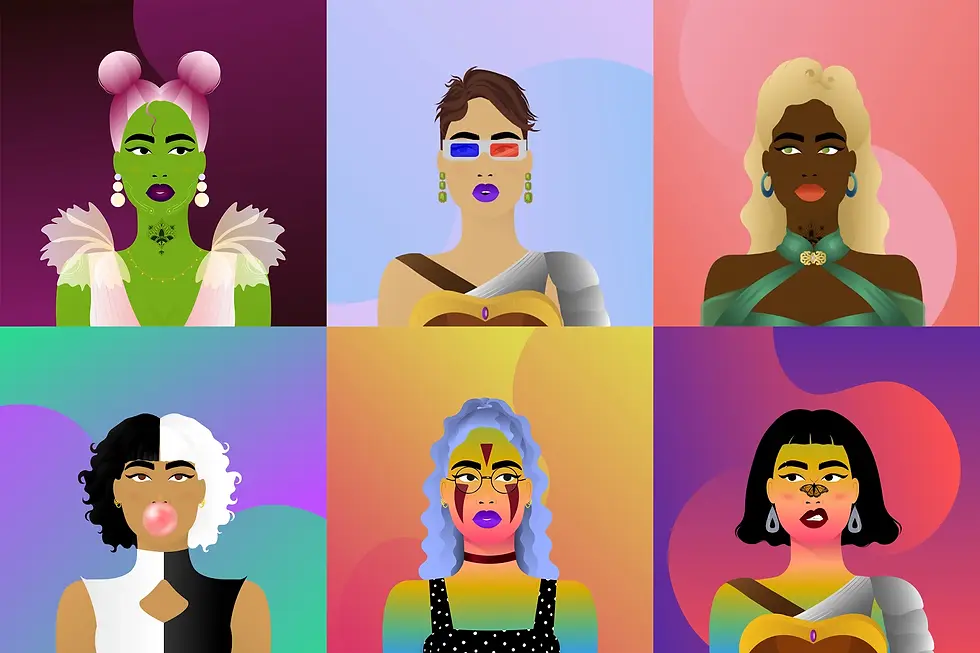
Another NFT project closely connected with women is the digital clothing. People can try on digital clothes within virtual environments, buying these clothes at a much lower price than real clothes for a sustainable purpose. I have tried a piece of digital jacket in HKU campus, it is interesting and quite meaningful to reflect on the clothes we bought over actual needs.
NFTs, as well as Metaverse can be terrifying and controversial on whether it would bring us to a “Brave New World”, a world with high-technology but less humanity. I am optimistic about how tech could shape art and the the future, as long as we use it as the tool but not the purpose.

Recently I have attended a Cantonese class in Spatial ( a metaverse app ) held by a schoolmate, it is a brand-new experience, though we didn’t know each other in real life, we could sit down and enjoy a same Cantonese song together in a parallel universe.


留言